
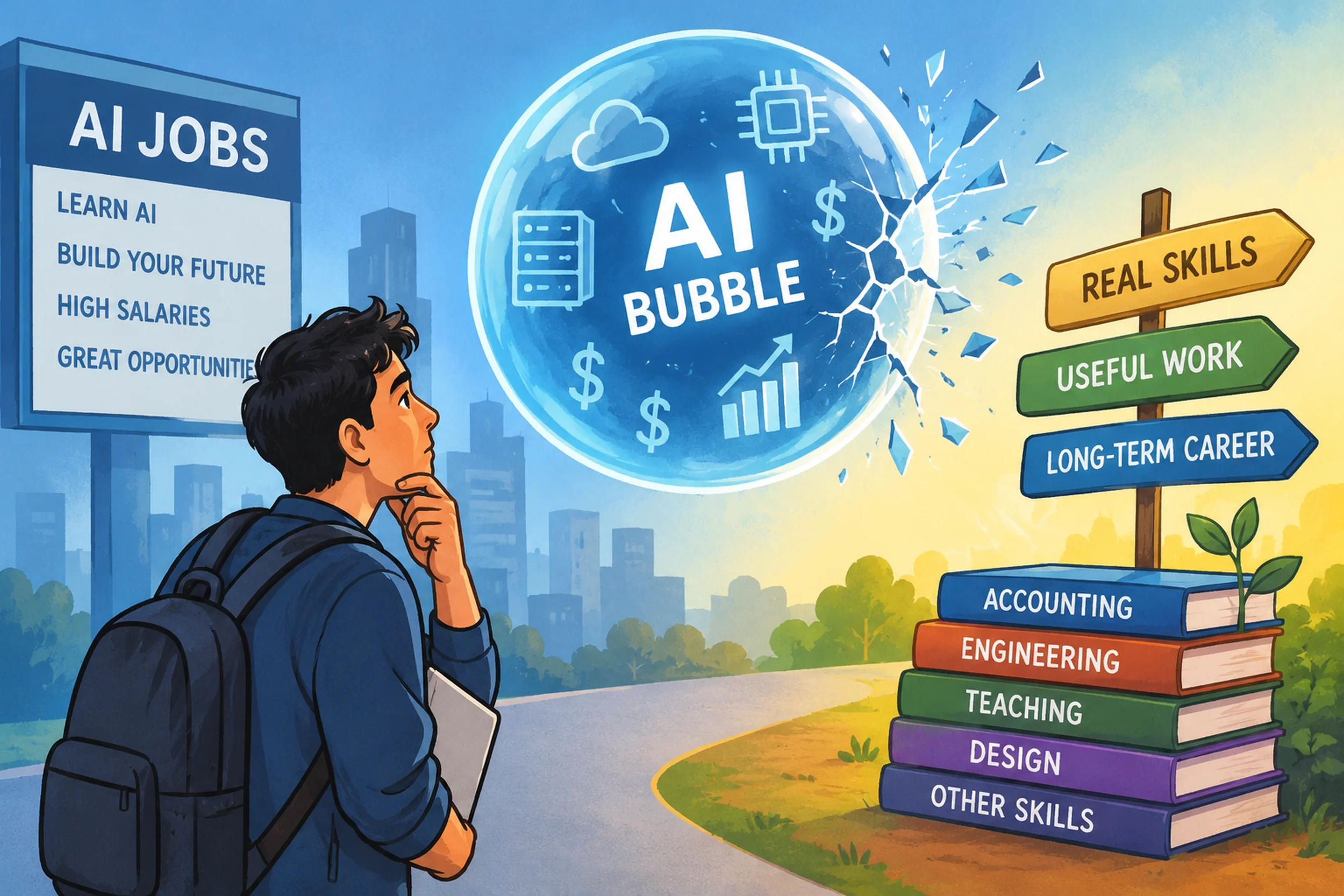
You are a fresh graduate. Everyone is advising you to learn AI. Companies are advertising AI jobs. You wonder whether learning it is really crucial for your career.
But many people have now begun asking an uncomfortable question. What if all these companies run out of funds? Top technology companies are pumping hundreds of thousands of crores into AI, expanding data centres, building advanced AI systems and buying powerful computer chips. Alphabet, Google’s parent company, alone spent 132 billion dollars on capital expenditure in the first nine months of 2026, more than double the amount spent during the same period last year.
While some companies are earning crores from AI-related services, others are losing money in spite of rapid growth. According to a Financial Times report, OpenAI expects to invest 278 billion dollars in cash between 2026 and 2030. These companies continue to invest heavily in developing AI infrastructure, hoping they will reap profits over many years.
But what if customers decide not to spend as much as AI companies expected? What if AI itself becomes cheaper and companies are forced to keep prices low? And most importantly, what if investors stop funding AI companies due to uncertainty about profits?
In such a scenario, some AI companies could start cutting costs by cancelling projects or reducing hiring. Or they may simply close. Suppose your work depends on some AI tool, and the company building it shuts down? Then what happens to your job? Or what if companies no longer need employees who have only mastered some AI tools?
Now let us take another scenario. Suppose you are an accountant. You are an expert at your job. You also know how to use AI to prepare reports faster, check figures and handle more work.
In future, even if the AI tool you use disappears, no one can take away your mastery of accounting. The same applies to engineers, teachers, designers and many other professionals.
This does not mean AI jobs and special AI skills have no future. However, learning AI is not the same as building a career. So, do not allow your entire future to depend on knowledge of one AI tool. Learn a conventional, traditional skill, one that people need. Then learn how to use AI to enhance that skill. Then, even if the AI bubble bursts, you can still depend on your ability to do useful work.